Nigerian Childhood Playground Games We Still Miss
Before smartphones, there was a stick, an old tyre and an entire afternoon. A love letter to the games that raised a generation.
6 min read

Before PlayStation, before smartphones, before anyone had heard the word "screen time", there was a stick, an old bicycle rim and an entire afternoon. If you grew up in Nigeria, you probably remember being called inside for dinner at least three times before you actually went, knees dusty, voice gone from shouting, already planning tomorrow's rematch.
Nigerian childhood playground games didn't come with instructions or batteries. They came from older siblings, cousins, neighbours and that one kid on the street who knew every rule and changed them whenever he was losing. They were loud, physical, fiercely competitive and completely free.
This is a nostalgic tour of the games many of us grew up with, plus some ideas for playing them again, because honestly, adults deserve recess too.
A quick note before we start: names and rules vary from region to region, state to state and even street to street. If your version was different, that's not wrong. That's the beauty of games passed down by mouth.
The jumping and hopping games
Suwe
Suwe is the Nigerian name many kids used for hopscotch. You'd scratch boxes into the sand with a stick (or draw them with chalk on a school floor if you were posh), toss a small stone or piece of tile into a box, then hop through the grid on one leg and back, picking up your stone on the way.
Step on a line? Out. Lose your balance? Out. Argue that you didn't actually step on the line? Everyone has been that child.
Ten-Ten
If you went to a Nigerian primary school, you'll remember the rhythmic clap, jump and stamp of Ten-Ten, mostly played by girls in the playground. Two players face each other, clap, jump and thrust one leg forward at the same time. Depending on whether the legs match or not, one player scores. Speed, rhythm and a good poker face decide the winner.
It looks simple. It is not. Many adults who try it again find their legs have forgotten everything their brains remember.
Skipping rope
From solo skipping to two kids turning a long rope while a third jumps in, skipping rope was everywhere. Some ropes were proper ropes. Many were stretched-out strips of old tyre tubes or knotted cloth. The chants and counting songs changed from school to school, but the thrill of jumping in at exactly the right moment was the same.
The chasing and hiding games
Boju Boju
Boju Boju is the Yoruba name for hide-and-seek. One person covers their eyes and counts while everyone else scatters behind water tanks, under staircases, inside the uncompleted building next door (which, looking back, was probably not safe). The seeker hunts, and the hiders try to get "home" without being caught.
The best hiders had secret spots they guarded like state secrets. The worst hiders giggled.
Police and thief
Split into two teams. The police chase. The thieves run. Captured thieves go to "prison", often a spot by the wall or a tree, until a teammate sneaks over and frees them with a touch. Games could last hours and cover entire estates.
Catcher
A pure chasing game, like tag. One person is "it" and has to catch someone else, who then becomes "it". Simple rules, maximum sweat. The variations were endless: catching only on one leg, catching with "safe zones", catching in teams.
Who is in the garden?
A circle game with a call-and-response song, often played in the evening. The details of the song differ depending on where you grew up, but it usually involved a person in the middle, a chant from the circle and a sudden chase. Many people remember the tune long after they've forgotten the words.
The make-your-own-toy games
Some of the best playthings were built, not bought.
Tyre and rim rolling
An old tyre or bicycle rim, a stick to push it, and an open road. Kids raced their tyres down streets and around compounds, steering with surprising skill. Some held organised races. Some just ran for the joy of it.
Milk tin cars and wire cars
Empty milk tins, bottle caps and bits of wire became cars, trucks and even buses. Wire cars could be beautifully detailed, with steering made from long wire handles. The child who could build a working danfo out of wire and tin was respected like an engineer.
Spinning tops
Spinning tops made from wood, seeds or bottle caps were spun on the ground in competitions. Whose top spun longest? Whose knocked the others over? Serious business.
Mummy and Daddy
The great pretend game. Sand became rice, leaves became vegetables, bottle caps became plates, and somebody's little brother was always forced to be "the baby". Cooking imaginary jollof in a tin can over imaginary fire was as serious as any real kitchen.
The indoor and classroom games
Ayo
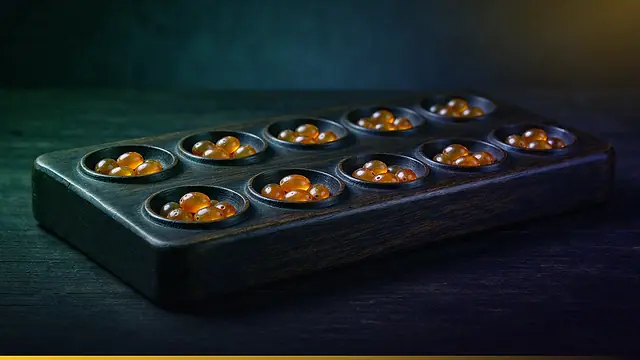
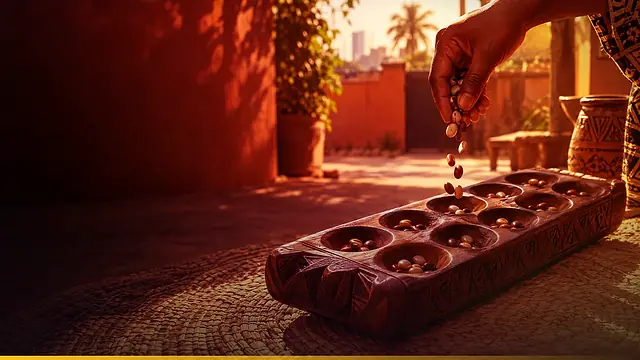
Not every game was in the sun. Ayo, the Yoruba seed game of the mancala family, was often played with grandparents, uncles or older kids, sometimes on carved boards, sometimes with holes scooped in the ground. If you never learned properly, here's our guide on how to play Ayo.
Ludo and Whot
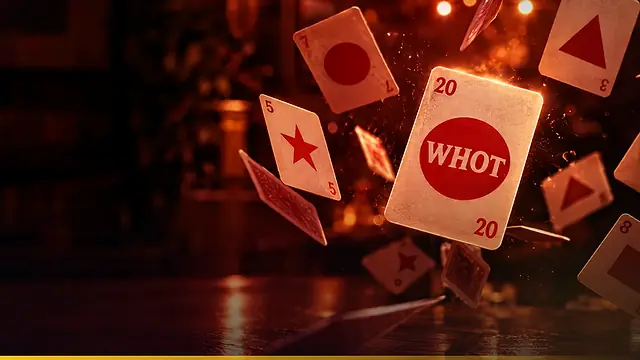
Rainy days and power cuts meant Ludo and Whot. Board games were the great equaliser. Younger kids beat adults all the time, and nobody took losing gracefully. Brush up with our guides to Ludo strategy and Whot rules and strategy.
Pencil fighting
A classroom classic. Two pencils, one desk, and a flick of the finger to knock your opponent's pencil off the table. Banned in many schools, which only made it more popular.
Why these games mattered
These games did more than pass the time. They taught kids how to negotiate rules, take turns, lose without crying (mostly), invent new things from scraps, and resolve fights without adults. They built friendships across houses and streets. Nobody needed an invitation to join. You just walked over and asked, "Can I play?"
We didn't call it socialising. We called it playing. It was the best friendship training we ever got.
That openness is something many adults miss. Making friends as a grown-up rarely feels that easy, and that's partly because we stopped playing. If you want to read more about that, see why play builds friendships.
How to play them again as adults
You don't need to pretend you're eight. But you can bring these games back.
- Host a throwback games day. Invite friends to a park like Freedom Park in Lagos or a big backyard, bring a rope, chalk, stones and a Ludo board. Dress code: old school uniform optional.
- Teach the kids in your life. Nieces, nephews and children growing up abroad often love these games when someone shows them. Ten-Ten and Suwe travel well.
- Start a family tradition. Make Ayo or Whot part of every December gathering.
- Bring it online. Kindred's Games pillar includes Ludo and Ayo, plus street-life games like Danfo Run, Danfo Race and Okada Race that capture a bit of that Lagos energy. You can play solo or in live multiplayer rooms with friends across devices. See how it works.
If you're living abroad and missing home, nostalgia like this hits even harder. Our culture and diaspora hub is full of ideas for keeping those roots alive.
Your throwback challenge
Send this to your siblings or childhood friends and ask one question: "What was your favourite game growing up, and what were the rules on our street?"
Watch the debate begin. Someone will insist Suwe had seven boxes, someone will swear it was eight, and for one glorious evening, you'll all be kids again.