Language Exchange Groups: Make Friends While You Learn
Nothing bonds two people like laughing at each other's terrible grammar. Here's how language exchange groups work and how to use them to make real friends.
6 min read

Every language learner has a story about the day they confidently said the wrong word in public. Asking a market trader in Paris for "préservatifs" when you meant jam (it means condoms, by the way). Announcing in Madrid that you're "embarazada" because you felt embarrassed (you've just told everyone you're pregnant). Telling a Lagos aunty you're looking for your husband when you meant your car, because in Yoruba the same letters, o-k-o, can mean husband, vehicle or hoe depending on the tones.
These moments are mortifying. They're also, weirdly, the start of a lot of friendships. Because nothing bonds two people faster than laughing at each other's terrible grammar.
That's what language exchange groups are built on: people who want to learn each other's languages, meeting up to practise, stumble and laugh together. If you've been thinking about joining one, or starting one, here are the questions people usually ask.
What exactly is a language exchange?
A language exchange is when two or more people who speak different languages help each other practise. You teach someone your language, they teach you theirs. Often it's split down the middle: half an hour in English, half an hour in French, for example.
Wikipedia's page on language exchange describes it as a method of learning based on mutual practice between partners. You'll also hear it called a "tandem", from the idea of two riders on one bicycle. The tandem language learning model leans on two principles: reciprocity (both people benefit equally) and learner autonomy (each person takes responsibility for their own learning).
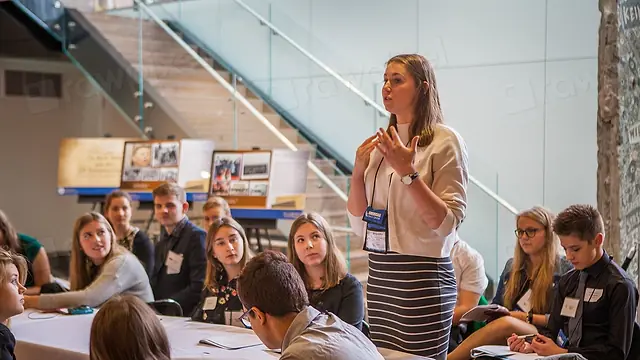
A language exchange group takes that idea and makes it social: a regular meetup, café session or online room where lots of people practise lots of languages.
Are language exchange groups actually good for making friends?
Honestly, they're one of the best set-ups going. Here's why:
- There's a built-in reason to talk. You don't need clever small talk. You literally showed up to have conversations.
- Everyone is a bit vulnerable. Making mistakes in front of strangers levels the playing field fast.
- People are curious about each other. Learning a language usually means you're curious about a culture, which means you're curious about the person in front of you.
- They repeat. Weekly or monthly meetups mean you see the same faces, which is how friendships grow.
- They mix people widely. Expats, students, locals, retirees, diaspora kids reconnecting with a heritage language.
When you're both bad at something together, you skip the part where you pretend to be impressive.
Where can I find a language exchange group?
Look in a few places:
- Cultural institutes. Organisations that promote particular languages and cultures often host conversation evenings or can point you to local groups.
- Universities. Language departments and international student societies regularly run conversation tables, and some are open to the public.
- Libraries and community centres. Many host free conversation groups for people learning the local language.
- Cafés and bars. Some cities have regular "polyglot nights" where tables are labelled by language.
- Online communities. Groups built around shared interests can be a great place to find language partners, especially if there's nothing near you.
If you're on Kindred, which is available in 12 languages, you can look for or start a community around a language you're learning and plan meetups as events. That way people who sign up can choose to go together instead of walking in alone.
What if there's no group near me?
Start one. Seriously, it's easier than it sounds.
- Pick a language pair or a theme. "English and French exchange" or simply "Multilingual hangout, all languages welcome".
- Choose a regular slot. Same day, same time, same place. "Every second Thursday, 6:30pm" is easy to remember.
- Find a relaxed venue. A café that doesn't mind people lingering, a library room or a park on a dry day.
- Recruit three to five people to start. Post in local community groups, ask friends who are learning languages, and tell international colleagues.
- Keep the structure simple. We'll get to that next.
If you've never started a group before, our guide on how to start a clique around a hobby walks you through the basics.
How should a language exchange session be structured?
Too loose and the confident speakers take over. Too rigid and it feels like school. Here's a simple format that works for most groups:
- Arrival and mingling (15 minutes). Everyone grabs a drink and a name tag showing the languages they speak and are learning.
- Pairing up (5 minutes). Match people with complementary languages. An English speaker learning Spanish pairs with a Spanish speaker learning English.
- Language A (20 minutes). The pair speaks only in the first language.
- Language B (20 minutes). Switch.
- Rotate. Find a new partner and repeat.
- Group wrap-up (10 minutes). Everyone shares one new word or phrase they learned. This part is usually hilarious.
Bring conversation prompts
Blank minds happen, especially in a new language. A few easy prompt cards help:
- Describe your favourite meal from your childhood.
- What does a perfect weekend look like?
- What's a festival or celebration from your culture you love?
- Explain a proverb from your language.
- What's the funniest mistake you've made in a new language?
Light games work too. A round of Would You Rather or a simple trivia quiz in the target language turns practice into play.
How do I stop being shy about making mistakes?
Remember that everyone in the room is in the same boat, and the people helping you are learners too. A few mindset tricks:
- Treat mistakes as the price of admission. No mistakes, no progress.
- Say "How do you say...?" a lot. It's the most useful phrase in any language.
- Ask to be corrected, but kindly. "Please correct me if I get something wrong, I want to learn."
- Laugh first. If you mangle a word, laugh before anyone else does. It shows you're relaxed.
If social nerves are a big barrier for you, our guide to social anxiety tips for real life has practical ideas.
How do I turn language partners into actual friends?
The exchange is the starting point, not the end. To move from "practice partner" to "friend":
- Suggest something outside the session. A film in the language you're learning, a cooking session where you make a dish from their culture, a walk.
- Swap music and shows. "You have to listen to this Burna Boy album" works in any direction.
- Celebrate cultural moments together. Invite them to your festival, ask about theirs.
- Keep in touch between meetups. A short message in the target language is great practice and keeps the connection warm.
For more on this step, see how to turn acquaintances into real friends.
Is it safe to meet language partners from online?
Usually yes, but the normal first-meeting rules apply. Meet in public places, tell a friend where you're going, and be cautious of anyone who quickly asks for money or personal information. Kindred's Safety Share links make it easy to let someone know where you are, and you can read more on our safety page.
Your challenge
Pick a language you've always wanted to learn, even a little. Your grandmother's language, the one your favourite songs are sung in, or the one spoken in the city you dream of visiting. This week, find or start one conversation with someone who speaks it. Ask them to teach you one phrase. Then teach them one of yours.
You might come away with a new word. You might come away with a new friend. Either way, you'll have a funny story. For more on bridging cultures, have a look through our culture and diaspora section.